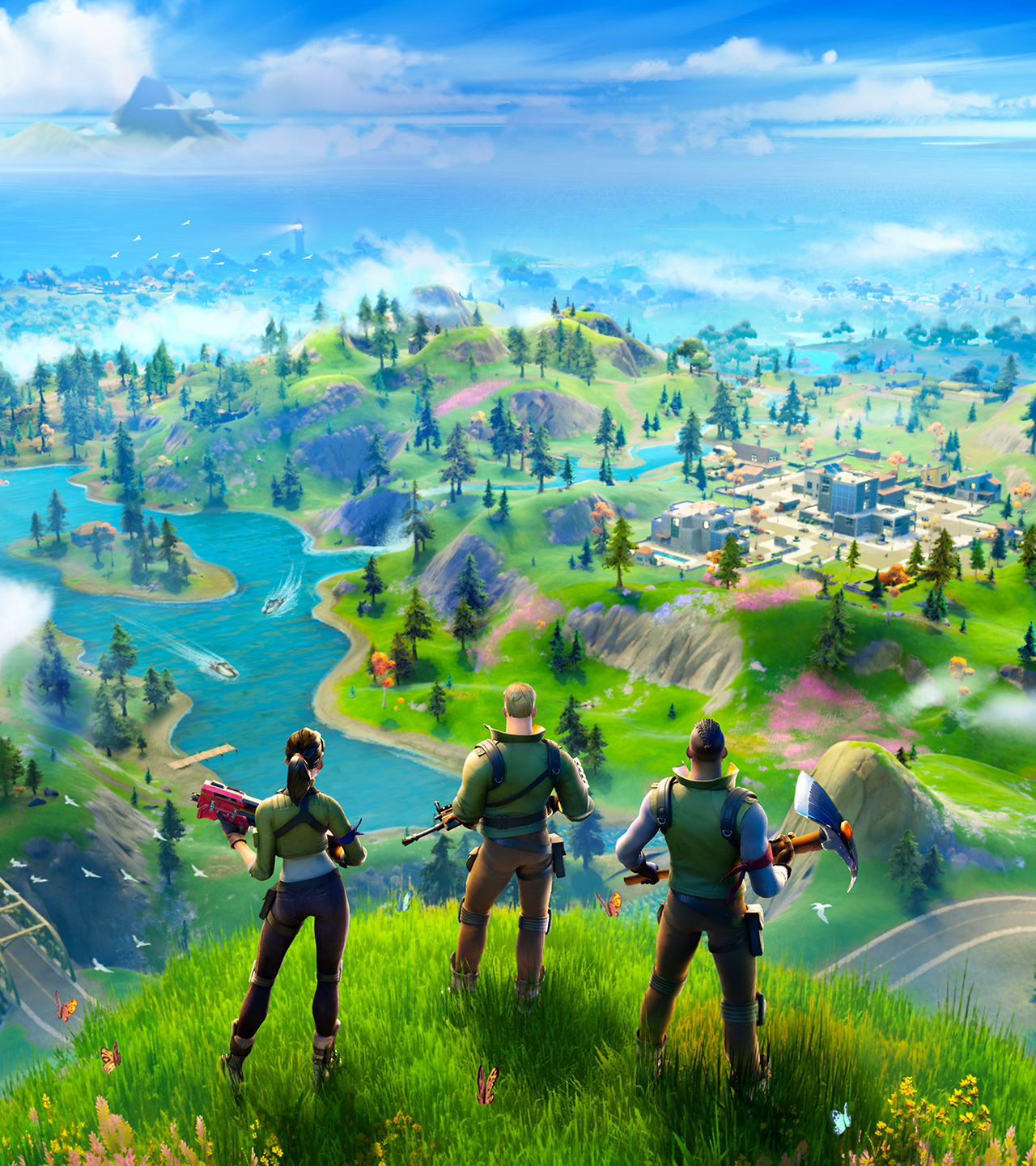
Fortnite drops 100 players on an island. One comes out alive. If you're new, that math is brutal — but survival doesn't require godlike aim or lightning-fast builds. It requires knowing what to do before the bullets start flying. This guide focuses on the fundamentals that keep you alive long enough to actually learn the game.
Where to Land and Why It Matters
Your first decision happens before you touch the ground. New players instinctively aim for named locations on the map — these are high-loot zones, but they're also where experienced players swarm. Until you're comfortable with combat, avoid them.
Better approach: Look at the Battle Bus flight path and identify named locations that are slightly off-route. These spots see lighter traffic, still offer solid loot, and give you time to gear up before making contact. Edges of the map work well too — you'll have fewer neighbors, and the storm gives you a natural push toward action at your own pace.
When gliding in, aim for buildings with multiple floors. Houses yield weapons, shields, and ammo reliably. Skip open fields and small shacks unless you're already armed.
Priority on landing: Grab the first weapon you see — anything beats fists. Then look for shield potions immediately. A small shield (25 HP) takes only 2 seconds to drink; mini shields should always be popped the moment you find them. Shields are frequently the difference between winning and losing a fight.
Loot Priority: What to Pick Up and What to Leave
Inventory space is limited to five slots. Beginners often fill up on everything shiny and end up carrying three assault rifles and no healing. Build a standard loadout instead:
- Slot 1: Close-range weapon — shotgun or SMG
- Slot 2: Medium-range weapon — assault rifle
- Slot 3: Long-range or utility — sniper, rocket launcher, or grenade launcher
- Slot 4: Healing — medkits or large shields (they restore 50 HP/shield, prioritize these)
- Slot 5: More healing or a mobility item — bandages, Chug Splash, or a launch pad
Rarity matters. Weapons come in grey (common), green (uncommon), blue (rare), purple (epic), and gold (legendary). Always upgrade to higher rarity if you find one — a gold AR outperforms a grey one significantly. Don't waste time hoarding grey weapons once you have blue or better.
Ammo check: Run out of ammo mid-fight and you're dead. Keep at least 100 rounds per weapon type. Light ammo (SMGs, pistols), medium ammo (ARs), and shells (shotguns) are the three you'll use most — pick up stacks whenever you spot them, even if your gun is already loaded.
Building Basics: You Don't Need to Be a Pro Builder
Building is what separates Fortnite from every other battle royale. You don't need to master it immediately, but ignoring it entirely will get you killed. Start with two core techniques:
1. The panic wall. When someone starts shooting at you, place a wall between you and them immediately. Press the build key, select wall, and drop it in front of your character. This buys you a second to heal, reposition, or just breathe. One wall saves lives. Practice this reflex — it should be automatic within your first five hours.
2. The ramp. Height wins gunfights. Enemies shooting down at you have angle advantage; you shooting down at them is even better. Build a ramp (angled platform) behind cover to gain elevation quickly. Even two or three ramp pieces above ground level changes the outcome of a fight.
Materials: Wood builds fastest but breaks fastest. Stone is slower but tankier. Metal takes longest to build but is strongest. Chop trees and wooden structures for wood early; break stone walls and boulders for stone. Don't hoard — use materials when you need them.
Zone Strategy: Play the Storm, Not Just the Enemies
The storm circle shrinks throughout the match, forcing players inward. Beginners often ignore it until they're taking damage — that's backward. The storm is your most predictable threat and also your best tool.
Stay ahead of the zone, not ahead of enemies. Always know where the next circle is and position yourself inside it or moving toward it. Players caught in the storm are desperate and predictable — you can pick them off as they run. Players inside the circle are in control.
Edge play vs. center play: Staying near the edge of the zone means you only have to watch one direction for enemies (they can't come from outside the storm). Center players have 360-degree exposure. As a beginner, edge play is safer — fewer surprise attacks, easier rotations.
Late game: When the final circle appears (top 10-15 players), don't rush in. Find high ground with cover and let others fight. The kill count doesn't matter — only one player wins. Third-partying (jumping into a fight between two other players) after they've both taken damage is a legitimate strategy. Let them weaken each other, then clean up.
Three Habits to Build From Day One
You'll lose games. A lot of them. That's fine — here's what to focus on between defeats:
- Always pop shields the moment you find them. Most beginners carry them and forget. Full shield is 100 extra HP — it's your first job when loot runs.
- Never sprint across open ground without cover. Move from tree to tree, build to build. Open ground is where you get sniped.
- Watch your minimap. The storm circle and its next position are always visible. Five seconds of map awareness every minute keeps you from making a fatal rotation mistake.
Fortnite punishes panic and rewards patience. The players winning final circles aren't always the best aimers — they're the ones who stayed calm, managed their resources, and knew when not to fight. That's learnable from your very first drop.